CERCA’s participation in the Citizen Science Project
Forage Fish Monitoring in the Salish Sea
In 2017, the Mount Arrowsmith Biosphere Region Research Institute (MABRRI), based out of Vancouver Island University (VIU), refined the original methodologies for assessing forage fish intertidal beach spawning and developed a program to train and support citizen scientists. Since then, grassroots organizations, individuals, and non-profits have been monitoring the beaches in their backyards to look for beach spawning forage fish eggs like those of Pacific sand lance and surf smelt. In 2023, the network of groups and people involved across the Salish Sea received the official name “Coastal Forage Fish Network” (CFFN). The Network is coordinated by MABBRI to facilitate collaboration between the participating groups and to process the monitoring data received from them.
The overall goal of this citizen science project is to determine where best to focus efforts, resources, and research to address data gaps to better inform management and regulatory decisions. The Network’s vision is thriving, stable forage fish populations that can sustain the predators that rely upon them and contribute to a healthy marine food web within the coastal waters of BC.
Forage Fish and their role in marine ecosystems
Forage fish are small species, also referred to as prey or bait fish, that are the main food source for larger predator species. They form a critical link in the ocean food web, providing energy transfer through the trophic levels by eating plankton and then becoming food for a multitude of other predators. Key forage species include Pacific herring, surf smelt, and Pacific sand lance.
Because of their abundance, schooling behaviour, energetic content, and size, sand lance is an important forage fish species for numerous marine predators throughout their range. Sand lance is both euryhaline and eurythermal as well as tolerant of reduced oxygen concentrations. Euryhaline means high tolerance to salinity; in other words, sand lance thrive in environments with varying salt concentrations. Eurythermal refers to organisms that tolerate a broad range of temperatures, from hot to cold. The absence of a swim bladder allows this narrow, elongate fish to spend much time buried dormant in intertidal and shallow subtidal substrates, venturing out only to feed or spawn.
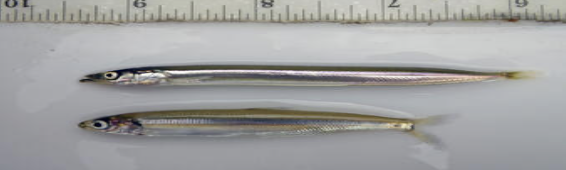
Their life span ranges from 3 to 12 years. Spawning usually occurs in fall or winter. Larval sand lance hatch before spring plankton. Sand lance are mostly dormant in winter.
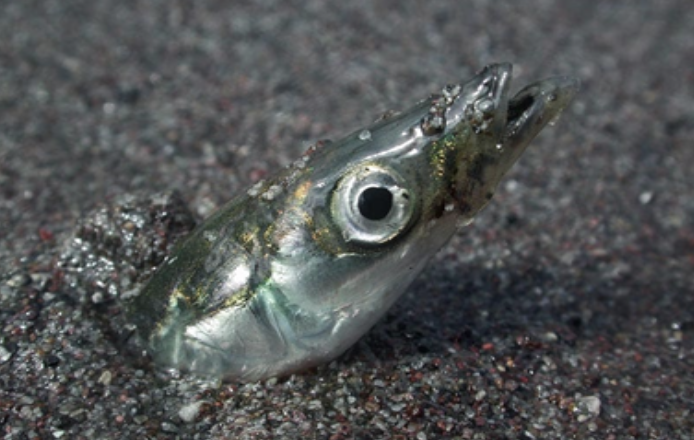
Sand lance buried in a gravel beach (Source: Conservation Law Foundation)
CERCA’s Co-Chair, Dr. Bill Heath has spearheaded this Citizen Science Project on behalf of CERCA since 2021, focusing the monitoring on the northern beach of the Westcan Terminal in Cowichan Bay, and beaches at Cherry Point and Maple Bay. Bill has involved students from Cowichan Secondary School, as shown in the photo below, sampling the Westcan Terminal beach.
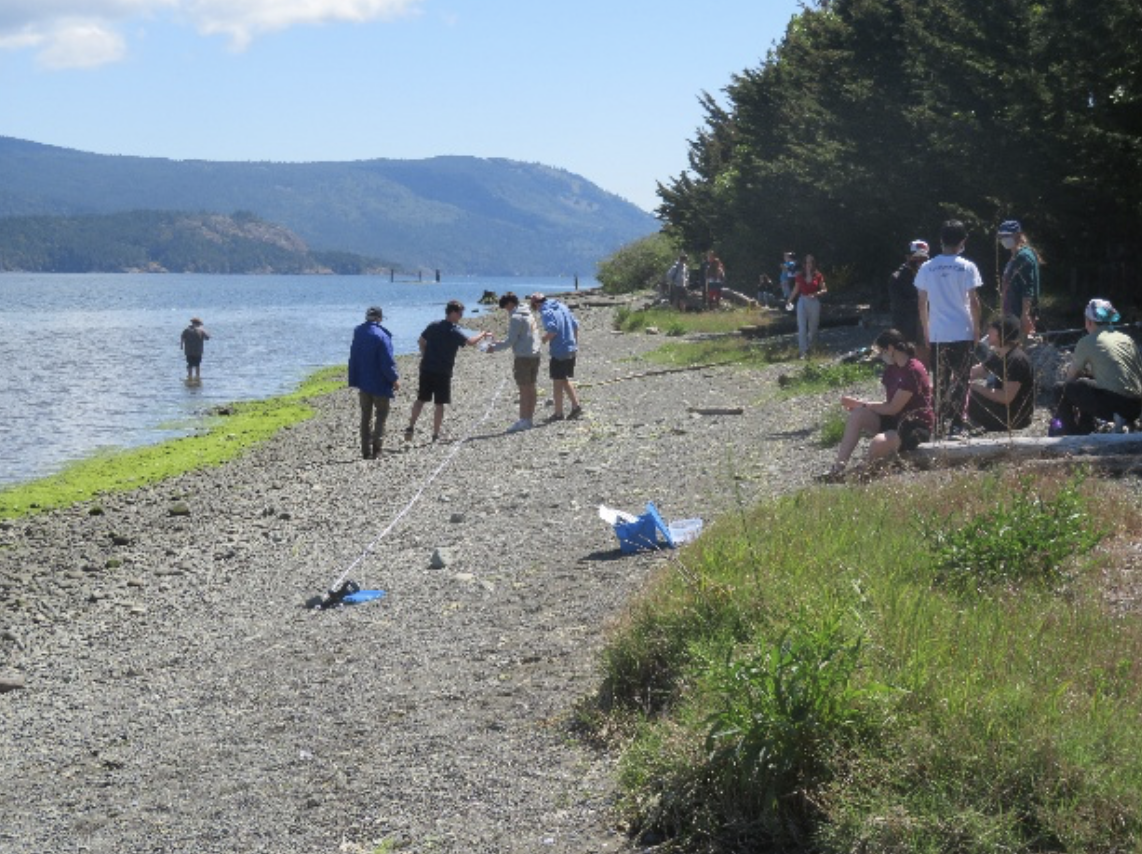
The samples taken from the gravel beaches are submitted to Vancouver Island University for processing. Meanwhile, sand lance has been successfully confirmed for two locations monitored by Bill, one of them the Westcan Terminal Beach.
The importance of forage fish as a main food source for many marine predator fish, such as salmon species, can’t be overemphasized. Protection of gravelly sand beaches, which constitute their main habitat, is therefore crucial. Any disturbance of such beaches, especially the use of motorized vehicles, should therefore be avoided. It is hoped that this project will help to make people aware of the importance of sand lance in particular, using our beaches for spawning, and their dormant period.
Unfortunately, MABBRI has just announced the suspension of monitoring for the 2025 summer and fall season due to budget cuts. However, it is hoped that funding will be available by the end of the year to continue with the monitoring.
Dr. Goetz Schuerholz
CERCA Chair